
Project Planning
To prepare to pitch my student garden initiative to the Boys and Girls Club, I worked with my mentors at the Institute for Systems Biology to create a full detailed project plan. This included project objectives, a full timeline of my 8+ weeks, garden specifications and options, irrigation details, space requirements, and community outreach objectives. We also made this into a presentation that we used during our initial meeting with the Boys and Girls Club. This portion of the project also involved lots of research. I found that both city and county environmental websites had lots of great resources about what crops would grow well in Seattle climate, soil testing information, and other resources for gardening projects.

Graphic from the City of Seattle about plants that grow well in the city during different seasons. This was useful since we were planting late in the growing season.

A portion of my project proposal that we pitched to the Boys and Girls Club
Garden Construction
After a site visit to the Boys and Girls Club D.A. Gonyea branch, I measured out the space, bought all the construction supplies, and got to work on constructing the garden space. Luckily, the Boys and Girls Club had a great space directly attached to their center with lots of sunlight and drainage. The first part of the building process was clearing out all the older plants and shrubbery that was in that area. This provided enough space for the garden beds to be placed.

Space Before Clearing Process

Starting the Clearing Process!
Before construction began, I worked together with the Boys and Girls Club to design a garden that worked for their space. We chose to do raised garden beds to create the best soil environment for our new plants to thrive. To avoid burrowing critters grabbing any of our veggies, we added mesh wire to the bottom of the raised beds. The beds were filled with a mixture of garden soil and compost. Huge thanks to my parents for helping with the clearing and assembly process!

Assembling the Garden Bed Kit
Cleared Space with Beds Installed


We added 40 bags total of mixed soils and composts to the beds.

Cleaned space and completed garden beds ready to plant in!
Education Day 1
In mid-July, we finally got to kick off our planting process with the new gardening club. The gardening club for the summer months was for the 3rd to 5th grade group of students. Mainly, I wanted to get the students excited about the garden and the fact that it was theirs to take care of and organize. We set up three stations that students rotated through so everyone got to plant something!
Station 1 was outside planting in the garden! After some research about plants that had quick harvest timings, I bought seed packets for radish, beet, kale, carrots, and two varieties of lettuce. I also bought some small sprouted plants of sugar snap peas, rosemary, basil, and zucchini squash to give those a head start in the garden. During our education day, the students got to learn how to transplant the sprouted plants, plant seeds in peat starter trays (for the lettuces and kale), and plant seeds directly in the soil (for the root vegetables). I also got the kids a pack of gloves, aprons, and lots of small hand tools so they would have the supplies ready to get their hands in the dirt!


Students transplanting the zucchini and planting seeds for lettuce in the trays.

Station 2 was painting a big garden sign for their new gardening club! I wanted the students to know that the garden was theirs to maintain and choose plants for, so adding a sign and picking a name for the garden was a fun way to make it their own.
Station 3 was a bean sprouting activity. I found an easy way online to show the students how seeds sprout with a hands-on demonstration. The students put a wet paper towel in a plastic bag, added staples across the center to hold the beans up, added a few bean varieties of their choice, and taped them up to the window to get sunlight with a small hold in the bag for air circulation. They also wrote down their predictions about what would happen to the beans. We had great success with this experiment when we checked in during the following week, with lots of large sprouts and visible roots branching. Some of the students even wanted to plant their bean sprout in the area near our garden beds to experiment if they would grow!


To stay organized for the education day, I created a full lesson plan with activities, timings, materials, and any instructions for the staff who were helping me out. I got a lot of great feedback for these activities from my mentors at ISB as well as from the Boys and Girls Club.
Education Day 2
For education day 2, the students did a creative urban planning activity. They were each given a description of a real city in the US, which included a description of the weather, environment, and one main environmental issues for the community there. For example, Portland OR had a polluted river from factories nearby that needed to be cleaned up for the wildlife there. The students were given a large poster to draw out their version of that city and some up with small solutions to fix the environmental issue that was explained on their handout. They also made a small presentation!

This student added an access road and a solar panel on top of a hill in Phoenix to harness solar energy for the community!

In their version of New York City, this student added a park for kids, a city garden, a school yard, and even invented a new plant called the greyberry.

Gardening club hard at work on their posters.

Portland, Oregon has been upgraded with a river clean-up, forest conservation, and park added to the forest for kids.
We also did a garden check-in! We were excited to see the radish already sprouting and the zucchini and herbs thriving. The students watered the whole garden and made some observations about what they saw growing well.

Education Day 3
Education day 3 was aimed at teaching the students the important of fresh produce. We focused the activity on nutrition and which foods help different parts of the body. We played a game where students matched the food to the nutrient to the body part. Some of the nutrients were difficult, but the students were eager to guess and learn about the ones that they didn't know.


The students working on their nutrient matching game!
After the matching activity, we went outside to the garden to work on the garden and check on our plants. The students made sure to add lots of water to the plants. We also transplanted the kale and lettuce variety seedlings that were growing in the seed trays into the garden bed so they could start to grow larger. The students learned how to remove the seedlings carefully from the pots and transfer them into small holes in the garden.


Community Gardening Education Event
Our community gardening education event was hosted to share resources about growing your own produce, community resources for gardening, and ways to access fresh produce for families in the area. The event was open to the full community, but aimed to share information with families of the students of the Boys and Girls Club of South Puget Sound. I originally had the idea to host this event because I wanted students to have support to explore interests in gardening at home. From there, I expanded the idea to share resources with the full community about gardening resources as well as other ways to have access to fresh produce. This event was something that I worked to set-up many weeks prior, with lots of emailing other community partners and organizing event logistics. Luckily, we were able to combine the community gardening education event with the summer bash event happening during the same week, so families got to enjoy both at the same time!

I was grateful to have so many amazing community partner nonprofits join our event, supporting topics ranging from gardening to food security. After our event, I was able to continue these collaborations in other ways by visiting the community partner sites and learning from them to get ideas to improve our Boys and Girls Club gardening club.
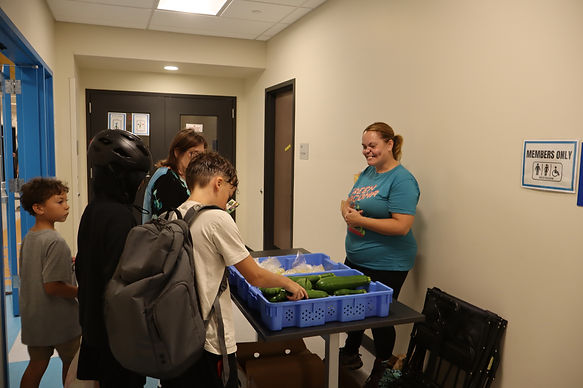

Ursula from Evergreen Produce Connection brought huge zucchinis, plums, and rosemary for the families to take home for free. All of the crops were gathered from gleaning, which is when volunteers clear out leftover crops after farmers harvest so nothing goes to waste!


Clare from the University of Washington Tacoma Giving Garden brought a huge poster explaining the programs at UWT supporting food security, as well as interactive games for the students to enjoy!

Marcus from The Making a Difference Foundation (MADF) and Eloise's Cooking Pot brought information about resources for food security that the organization provides and free snacks for the kids. MADF also has an amazing internship for 18-25 year olds in Tacoma to learn about hydroponics, and they grow greens that are supplied to the food bank!
Kim and Michelle from the WSU Extension Master Gardener Pierce County branch were able to share information about the master gardener classes. They also gave out seed packets to start your own pollinator garden! After meeting them, I was able to later visit a student garden that they run at a local middle school.


Lex from Pierce County Conservation District was able to provide lots of informational flyers about the many programs and resources that Pierce County offers for gardening and food security.


Outside, students got to show their parents the garden that they had been working hard at for the last month! They also planted some extra seeds and got to take the small pots home to transplant in their home gardens.
Education Day 4
For our final education day, the students and I did a succulent propagation activity and then worked outside for some exciting garden work. The succulent activity was to teach the students about how propagation from a leaf or branch works. Succulents were an easy choice for this lesson because they are hardy and can grow with less water. The students got to take their succulent plants home to continue growing.


It was an exciting day for our garden check-in because we had our first fully grown zucchini! They also harvested a small radish that was poking out of the soil, and one student even washed and tried a small bite. The harvested vegetables in the coming weeks will be put in a basket at the front desk for parents to take home. The students enjoyed seeing how their hard work over the last 1.5 months resulted in organic vegetables that they could enjoy. We also did some pruning of zucchini leaves that had developed mildew fungus and some other wilting beet leaves.


GoodRoots Northwest Visit
In the process of inviting local organizations with missions related to urban gardening and fresh produce food security to the Community Gardening Education Event, I reached out to GoodRoots Northwest. GoodRoots Northwest connects rural and underserved areas with convenient access to fresh produce and other nutritious foods. Although they could not join us for the event, Stacey and Stephanie from GoodRoots Northwest invited me to tour their wonderful storefront where customers come to pick up their groceries. I could immediately tell that their organization has become an integral part of the community in Buckley, Washington, with many of the residents coming weekly for free groceries that can supplement their other grocery store purchases. The executive administrator, Stephanie, who was giving me the tour explained that in one of the towns nearby that their storefront serves, there is no other grocery store at all. Their organization aims to improve food deserts in nearby rural areas.

GoodRoots NW also provides snack packs to kids in the area during the summer months, since they no longer have access to school-provided meals. The families can pick up packs for the week at their local school or community center.
One of GoodRoots NW's values that I really appreciated learning about was 'dignity'. Their storefront is set up like a typically grocery store experience where customers take a cart and shop through the store to pick out which food items they would like. Instead of prices, they label the items with limits per person. Unlike some food banks where each customer gets a randomized box, the experience of choosing items while shopping supports the dignity of this community. Stephanie described that the kids that come with their parents to shop do not even recognize that the GoodRoots NW store is any different than a Walmart. I appreciated hearing about how important it is to incorporate dignity as a value while serving your community to promote a positive relationship with your community during your service. In the future, I hope to think more actively about this value and how I can promote it in my projects.


Stephanie also showed me their innovative locker system, where customers can order the groceries they want online, get it delivered to one of nine locker locations surrounding Buckley, and then they can pick it up at a convenient time for them. This allows customers who work long hours or busy schedules to still access the fresh food through GoodRoots NW. The lockers are also refrigerated, so the produce or meats are safe to store. They have introduced two college locations as well to promote food security for college students in the area.
North Tapps Middle School Garden Visit
After meeting with the Master Gardeners, Michelle and Kim, who partnered with us for the Community Gardening Education Event, I was curious to see their student garden that they have been working on for multiple years at North Tapps Middle School. They have a beautiful large space with a huge variety of fruits and vegetables thriving, including thornless blackberries, potatoes, many leafy greens, ripe tomatoes, and strawberries. I loved hearing about how they had started from just a few garden beds and slowly expanded to a much larger area with a huge variety of produce growing. I was very grateful to have joined the WA gardening community and to have met inspiring members like Michelle and Kim, who could provide me with support for my garden project. Michelle shared so many great ideas for expanding our Boys and Girls Club garden in future years, which I will definitely try to implement each year to grow our garden as well.


